











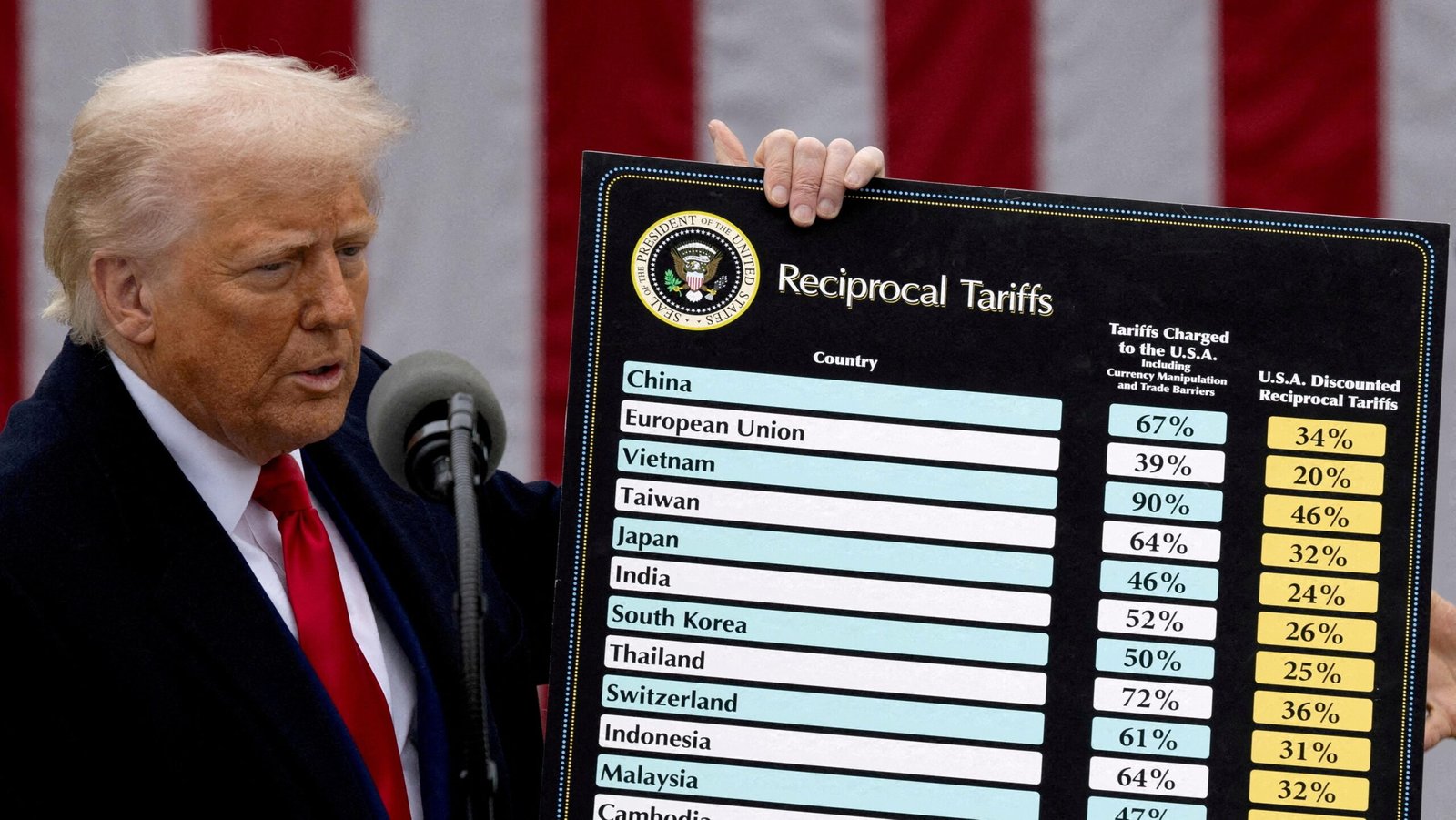
The U.S. Supreme Court is poised to deliver a landmark decision on the legality of several tariffs imposed by the Trump administration, a case that carries significant implications for the scope of presidential power and global trade. Scheduled for oral arguments on November 5, 2025, the case will scrutinize whether former President Donald Trump had the legal authority to impose sweeping tariffs under the International Emergency Economic Powers Act (IEEPA) of 1977.
Trump utilized the IEEPA and declared a national emergency to justify tariffs of up to 50% on imports from countries including India, Brazil, and China, citing economic security threats from large trade deficits and issues such as fentanyl trafficking. These tariffs form the cornerstone of his economic policy, generating nearly $90 billion in revenue for the U.S. government in the fiscal year 2025. Opponents, including businesses and a coalition of states, argue that the president overstepped his authority since the IEEPA does not explicitly grant tariff powers and that this unprecedented use stretches the law beyond its intended limits.
A ruling against Trump could disrupt his global tariff regime and potentially compel the government to reimburse companies that have paid billions in tariffs. Trump has framed the case as “one of the most important in the history of our nation,” warning that a loss would hamper future trade negotiations and weaken U.S. national security. While Trump has stated he will not personally attend the Supreme Court hearing to avoid distraction, this legal battle remains critical for defining the balance of executive authority in trade policy.
The decision will affect millions of businesses both domestically and internationally, many of which have faced disruption and increased costs due to the tariffs. The Supreme Court’s ruling will be closely watched for months as it may reshape U.S. trade policy and presidential powers in a broad sense.