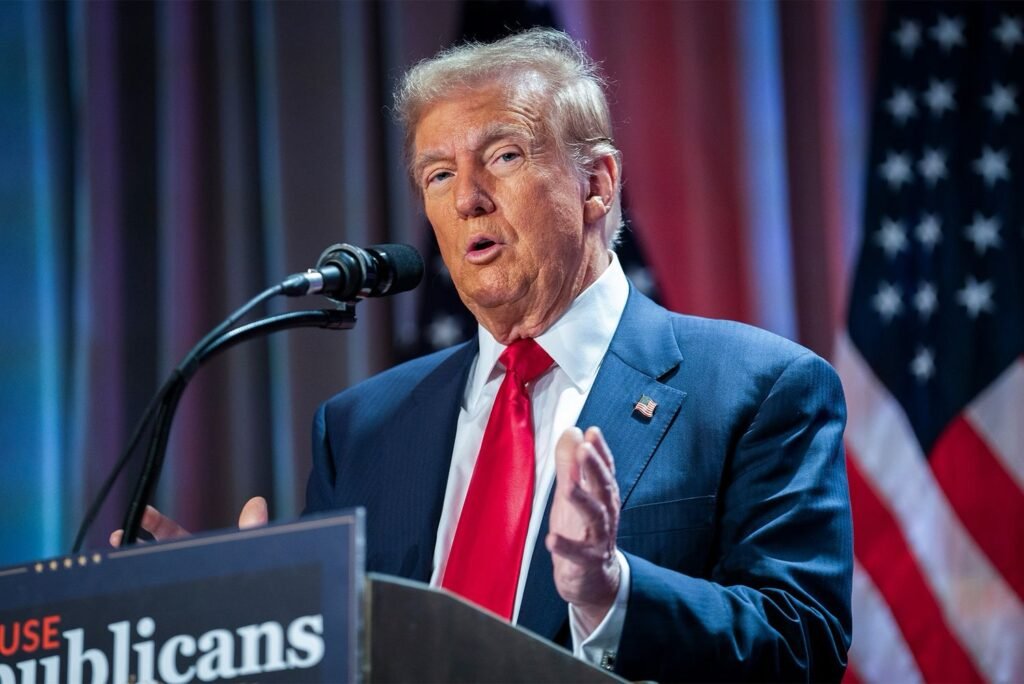











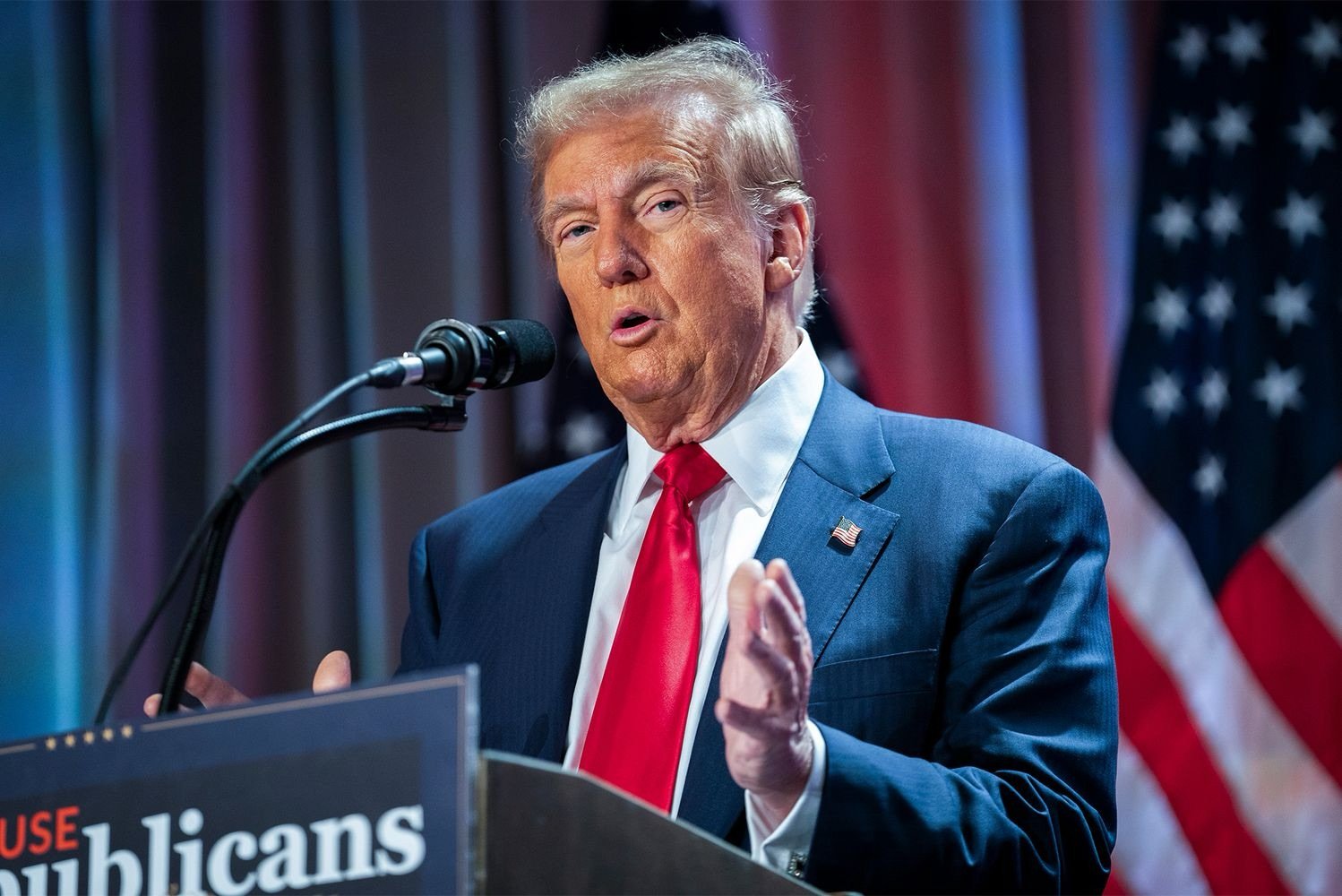
Nigerian financial markets experienced a significant downturn on Monday as investors reacted with alarm to a public threat of potential military intervention against the country by United States President Donald Trump.
The market slump saw stocks shed N247 billion in capitalisation as investors urgently repriced Nigerian assets in response to the heightened political risk. The Nigerian Exchange (NGX) All-Share Index (ASI) depreciated by 0.25 percent by the close of trading, signaling investor concerns over the implications of the US President’s statement.
The negative sentiment was equally felt in the currency and bond markets: The Nigerian Naira depreciated by one percent against the US dollar in the official foreign exchange (FX) market. Central Bank of Nigeria (CBN) data showed the Naira lost N14.61, with the dollar closing at N1,436.34, compared to N1,421.73 recorded on Friday.
Eurobond Selloffs: Nigeria’s dollar-denominated sovereign bonds (Eurobonds) also saw massive selloffs, with reports indicating they posted the steepest losses among emerging market debt.
President Trump had designated Nigeria a ‘Country of Particular Concern’ on Friday, followed by a post on social media over the weekend threatening to cut off all US aid and potentially launch a “fast, vicious” military action against the country to “wipe out Islamic terrorists” allegedly persecuting Christians.
Analysts attributed the sharp market decline directly to the threat, noting that such statements significantly raise the risk premium on Nigerian assets. Ayokunle Olubunmi, Head of Financial Institutions Ratings at Agusto & Co., highlighted that the renewed political risk fueled the negative sentiment that led to the Naira’s immediate loss.
The Centre for the Promotion of Private Enterprise (CPPE) warned that the US leader’s remarks risk undermining Nigeria’s image as a stable investment destination, potentially causing domestic and international investors to delay projects or divert capital to peer economies with lower perceived political risk.
The Nigerian government has pushed back against the claims of religious persecution, with President Bola Tinubu’s administration reportedly seeking to ease tensions through diplomatic channels while affirming the nation’s territorial integrity.