












The Federal Government today intensified its defense of the ongoing economic reforms, with the Minister of Regional Development, Abubakar Momoh, asserting that the policies, though painful in the short term, are the only path to building a sustainable future of “shared prosperity” for all Nigerians.
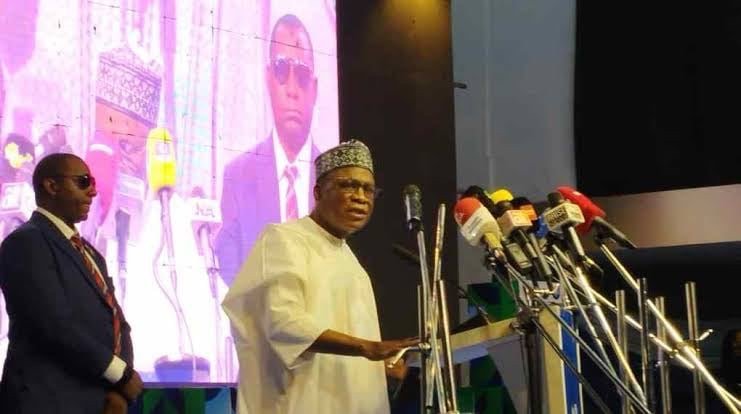
Minister Momoh made the assertion on Monday while delivering the 55th Founder’s Day Lecture of the University of Benin (UNIBEN), where he spoke on the topic: “Reforms for a Shared Prosperity.”
The Minister acknowledged the hardship currently being endured by citizens but argued that the decisive actions taken by the Tinubu administration were necessary to rescue the economy from decades of deeply entrenched structural problems.
Minister Abubakar Momoh: “Many Nigerians who are feeling the immediate pains of the ongoing reforms might not fully understand why the government had to take decisive action on long-standing structural distortions in the economy… No previous administration had summoned the courage to confront this situation until President Tinubu introduced decisive reforms.”
He specifically highlighted the removal of the petrol subsidy and the unification of the foreign exchange rate as critical moves designed to restore transparency, strengthen investor confidence, and eliminate massive corruption and smuggling that previously drained national resources.
Momoh further disclosed other government initiatives aimed at creating liquidity and stability, including the planned issuance of a \text{N}4 trillion bond to clear outstanding debts owed to power-generation companies and gas suppliers, a move expected to stabilize the nation’s fragile power sector.
The Minister’s message to the academic community and the wider public was clear: the economic transition is about enduring temporary difficulty to construct a foundational stability that is necessary for long-term, inclusive, and sustainable growth where genuine wealth is created and prosperity is broadly shared.