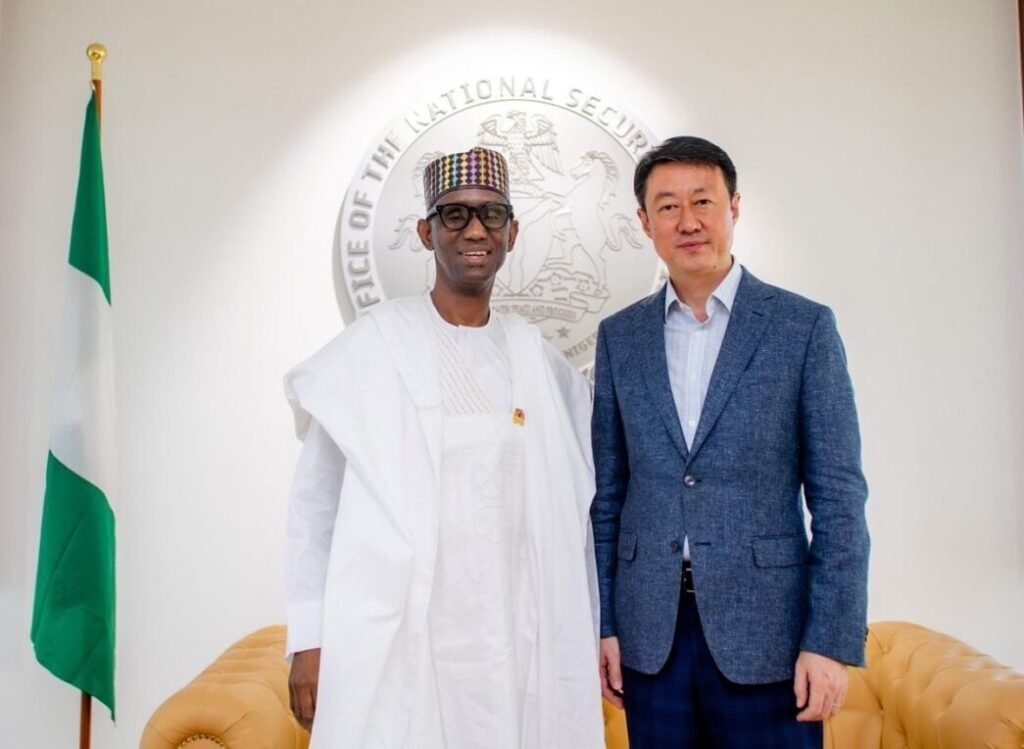











The Federal Government of Nigeria has received a significant boost in its diplomatic pushback against external threats, as China formally expressed its backing for Nigeria’s counter-terrorism efforts and strongly rejected the use of sanctions or force by foreign nations to interfere in its internal affairs.
The support from Beijing comes in the wake of recent, unprecedented military threats made by US President Donald Trump over Nigeria’s handling of religiously motivated violence.
During a routine press briefing, Chinese Foreign Ministry spokesperson Mao Ning affirmed China’s stance of non-interference, directly addressing the mounting tensions between Abuja and Washington.
Mao Ning’s Statement: “China firmly opposes any country using religion or human rights as a pretext to interfere in the internal affairs of other nations or to threaten them with sanctions or force.”
This statement is seen by analysts as a diplomatic “shield” provided by a key global power, reinforcing Nigeria’s sovereignty at a politically sensitive time. Beijing’s foreign policy consistently advocates for a government-to-government approach, free from the conditions often attached to aid by Western nations.
China and Nigeria have enjoyed a long-standing and cordial diplomatic and military relationship dating back decades. This cooperation includes tangible support for Nigeria’s security architecture, featuring:
The provision of military aid (gratis), Assistance with defense procurement and Capacity building through training for Nigerian military personnel engaged in counter-terrorism operations against groups like Boko Haram and ISWAP.
The Chinese support underscores the geopolitical reality that as Western allies pressure Nigeria over issues like human rights, Abuja often turns to alternative global partners like China and Russia for unconditional security and economic cooperation, highlighting the delicate balancing act in Nigeria’s foreign policy today.